
Jane lived a quiet life but the wicked ways of the world touched her and informed her writing. And when I refer to wicked ways I am not suggesting the 18th Century relaxed attitudes to sexuality, where one in three women were pregnant as they walked up the marriage aisle in the 18th century. 1. I mean the wickedness of inequality, hypocrisy and double standards. Women without dowries (or women’s shares), women in lowly social classes, women in loveless marriages and women who were courted for their fortune were in unhappy positions that Austen explored many times in her novels. Continue reading
Tag Archives: literature
Prudishness
Filed under Feminism, Uncategorized
What about religion?

English: “Protested that he never read novels” – Mr. Collins claims that he never reads novels. Austen, Jane. Pride and Prejudice. London: George Allen, 1894, page 87. (Photo credit: Wikipedia)
Filed under Living the Simple Life
In celebration of happiness day!
This week we celebrate International Happiness Day. More learned commentators will be able to guide us on how to achieve happiness but does Austen have something to contribute? Not only does reading her six novels delight but within the subtext there are some lessons on happiness. Pride and Prejudice’s Mr Bennet is a case in point; he knows how to live contently despite a plethora of problems and a nightmare wife! Continue reading
Filed under Resilience
A malleable friend
 Emma, our spoilt princess, lives a quiet life with her father, her mother having died when she was but a young child. Her sister has married and moved to London. When Emma was twelve, she had become the mistress of the house. “The real evils indeed of Emma’s situation were the power of having rather too much her own way, and a disposition to think a little too well of herself.” And so a friend close by and malleable was naturally attractive, to our spoilt princess, socially superior but with time on her hands, adopts the attractive, pleasant and Malleable-Harriet. Continue reading
Filed under Friendship
Was Austen a snob?
a typical Jane Austen image, painted by her sister Cassandra, not very flattering!
Jane Austen has at times been accused of snobbery as she makes her clearly imperfect characters say snobby things. Emma is perhaps our best example. Egotistical-Emma likes the position she commands in society and she likes to be in control. When she finds out that her new best friend Harriet has begun a love affair with a local farmer, she is none too happy. Continue reading

Filed under Living the Simple Life
What about Cassandra’s first and only love?

English: Silhouette of Cassandra Austen (1773-1845), sister of Jane Austen (Photo credit: Wikipedia)
More successful than Jane’s first love but with a tragic outcome was Jane’s sister Cassandra‘s love affair with Tom Fowle. Tom was a friend of the family having spent time as a pupil in Mr George Austen’s school. In some ways these young adults grew up together. The school was part of the house and George Austen’s pupils joined the Austen family, both the brothers and the sisters in family life.
Cassandra became engaged to Tom in 1792, but there was no money and so rather than a marriage, Continue reading
Filed under Romance and Marriage
Is it important to make the first move?

sally hawkins and rupert penry-jones filming persuasion (Photo credit: Owen Benson Visuals)
Why is it that when we really like someone we can hardly speak, let alone tell the target of our fantasies of our feelings? Yet this can be crucial. It is humbling to put yourself out there and it is one big risk. But courage is necessary and the results can be revolutionary. Continue reading
Filed under Romance and Marriage
Random Acts of Kindness

Random Thoughts of Kindness Barnstar (Photo credit: Wikipedia)
As the happy recipient of a random act of kindness yesterday, I’m pondering on such acts in the Austen Six. The winner has to be Decent-and-Dependable-Colonel Brandon, who presents a living (in today’s speak a job) to Honourable-Edward Ferrars. Edward was disinherited by his aspirational mother, Ambitious-Matriarch-Mrs Ferrars, after acting honourably by Lucy Steele.
Colonel Brandon wasn’t friends with Edward; he had just met him a few times and had heard his heartfelt story second hand but wanted to help. In the Austen Six those who act well by their fellow man Continue reading
Filed under Living the Simple Life
What about Bridezilla?

Wedding (Photo credit: teresachin2007)
Upon reading Hannah Seligson’s, The Me, Me, Me Wedding, and learning of the export of the western Bridezilla phenomenon to other cultures, I am reminded of the last words of Austen’s Emma:
The wedding was very much like other weddings, where the parties have no taste for finery or parade; and Mrs. Elton, from the particulars detailed by her husband, thought it all extremely shabby, and very inferior to her own.—”Very little white satin, very few lace veils; a most pitiful business!— Continue reading
Filed under Romance and Marriage
What about the kitchen garden?
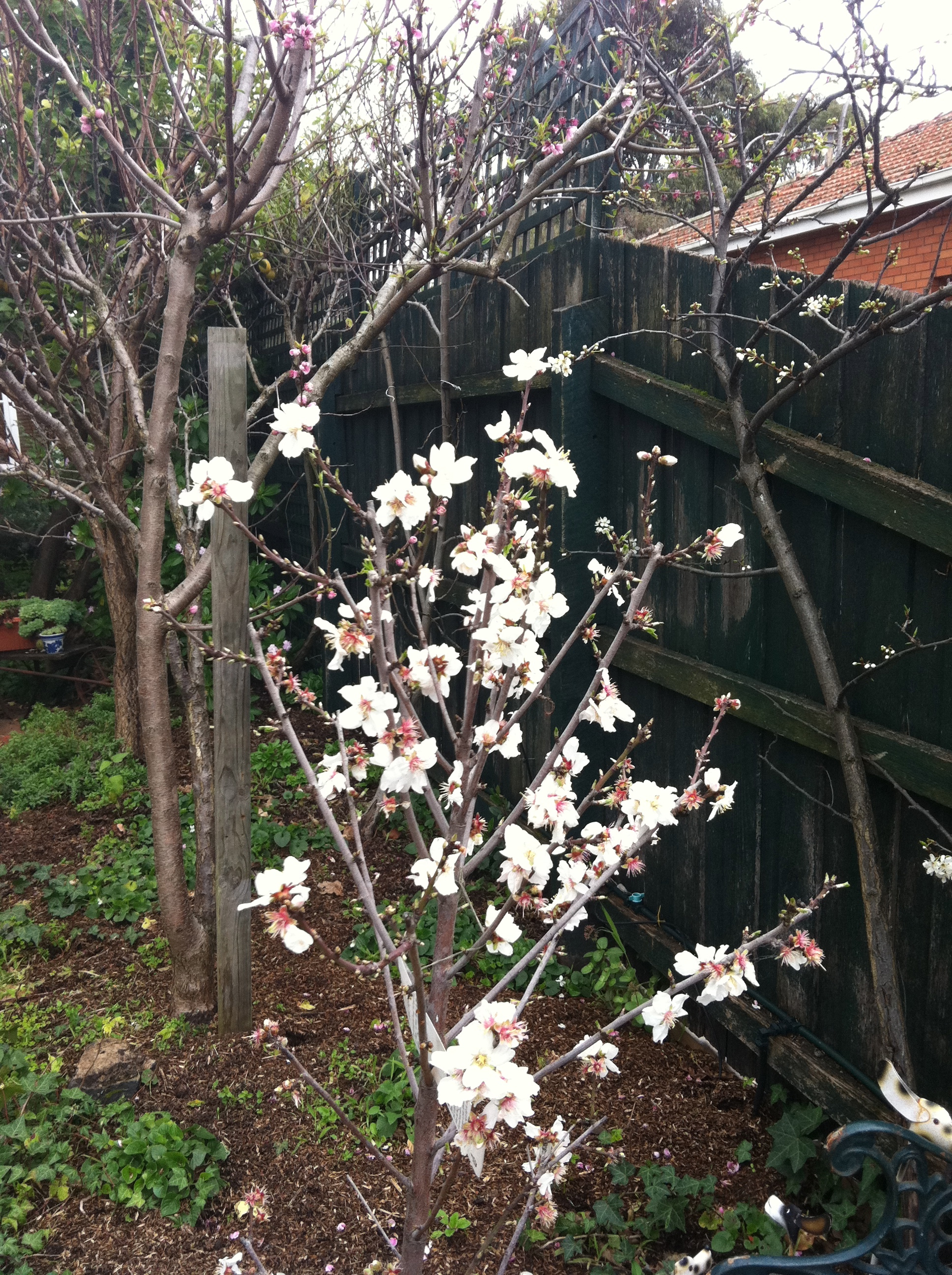
The promise of the fruit to come
The Austen household (Jane, Cassanandra, her mother and her friend Martha Lloyd) relied heavily on what was in season and the kitchen garden was crucial to a healthy life. Like many of the middling people of the time who were neither rich, nor the working poor, they were able to live comfortably on very good home produced food with only the staples of tea, coffee, chocolate, sugar, spices and citrus fruits that had to be bought. Cassandra kept bees while Mrs Austen kept a poultry yard. Often presents of game would be sent from their brothers, Edward and James.
Growing and cooking your own food was like breathing and is so different from the world of today where many of us have lost the art of cooking let alone growing and catching our own food. Continue reading
Filed under Living the Simple Life

 Austen's Guide to Happiness