
 Do you let children play with all comers or do you select carefully based on dubious criteria? Katie Hopkins likes to select her children’s Continue reading
What about snobs?
Filed under Money
Is sitting at our desks good for us?

English: Persuasion (last Jane Austen Novel) ch 23 : Captain Wentworth is showing his letter to Anne, “with eyes eyes of glowing entreaty fixed on her” Français : Persuasion (Jane Austen) ch 23. Frederick Wentworth montre à Anne une lettre sur le secrétaire, en la regardant avec insistance. (Photo credit: Wikipedia)
Being outside, walking or strolling and being in the elements lifts our spirits. I remember a book once that started out with the premise that GOD actually was an acronym and stood for the Great Out Doors! It made sense; the great outdoors – sunshine, wind, the sky – can bring about a significant increase in wellbeing. Could it just be possible that the reason some of us struggle to find happiness in the modern age is because many of us work at desks? In our world we have so many other things available to make us feel good when we are down but perhaps the simplest and the easiest is Continue reading
Filed under Living the Simple Life
Why is Catherine Middleton respected?

Kate, the Dutchess of Cambridge, on Buckingham Palace balcony after her wedding to Prince William. (Photo credit: Wikipedia)
Jane Austen seemed to like to make the self important fall and the ordinary and unimportant shine. The Very-Very-Important-and-Vain-Sir Walter Elliot, in Persuasion, believes in consequence. To be important, to be special, is to him the most important concern of life. To be honest and to pay one’s debts does not really figure. Who can forget Austen’s opening lines:
Sir Walter Elliot, of Kellynch Hall, in Somersetshire, was a man who, for his own amusement, never took up any book but the Baronetage; there he found occupation for an idle hour, and consolation in a distressed one; there his faculties were roused into admiration and respect, ……..
“Heir presumptive, William Walter Elliot, Esq., great grandson of the second Sir Walter.” Vanity was the beginning and the end of Sir Walter Elliot’s character; vanity of person and of situation.
He is in direct contrast to his youngest daughter, Virtuous but Undervalued Anne. She realises her own insignificance and finds pleasure in friends and social responsibilities rather than her own consequence. She treats all others with respect. As she describes herself, “she is no card player”. She feels compassion for those less wealthy and does not reject friends just because they are down on their luck. She has her priorities right.
Maybe this is why Catherine Middleton is so popular – she also seems to have her priorities right? Continue reading
Filed under Feminism
What do Fanny and Julia have in common?
Once upon a time in a little land called Australia, ok it was a big land but a small population, there was a female politician called Julia. She had been born from immigrants who had seen education as the key to advancement and this she did. She advanced in spades until one day she entered Parliament. She worked hard, got on well with others and negotiated through such hostile environments that she was accepted and became very important – so important that she played second fiddle to the very important white males who were the leaders. And then one day, when things weren’t going so well amongst the important white males she thought she may as well be the leader. Naturally, as happens in quaint little democracies, there were loud howls of protest. But she put her head down, did what lots of women do, cleaned up the mess, and got on with business. Continue reading
Filed under Feminism
What about the contentment gene?

Alison Steadman plays Mrs. Bennet in Pride and Prejudice (Photo credit: Canadian Pacific)
The contentment gene should be patented. But if not born with it, is there other ways to acquire it? Some have called it the happiness set point. Looking at our expectations might be a good place to start. Sometimes we need to be vigilant to ensure that our expectations are not fueling our unhappiness. Expecting little can ironically lead to a happier life as one doesn’t suffer constant disappointment. In our Western world we often grow up with a sense of entitlement. We expect to do better than the last generation. We expect to own a fashionable home, we expect Continue reading
Filed under Resilience
Renovation
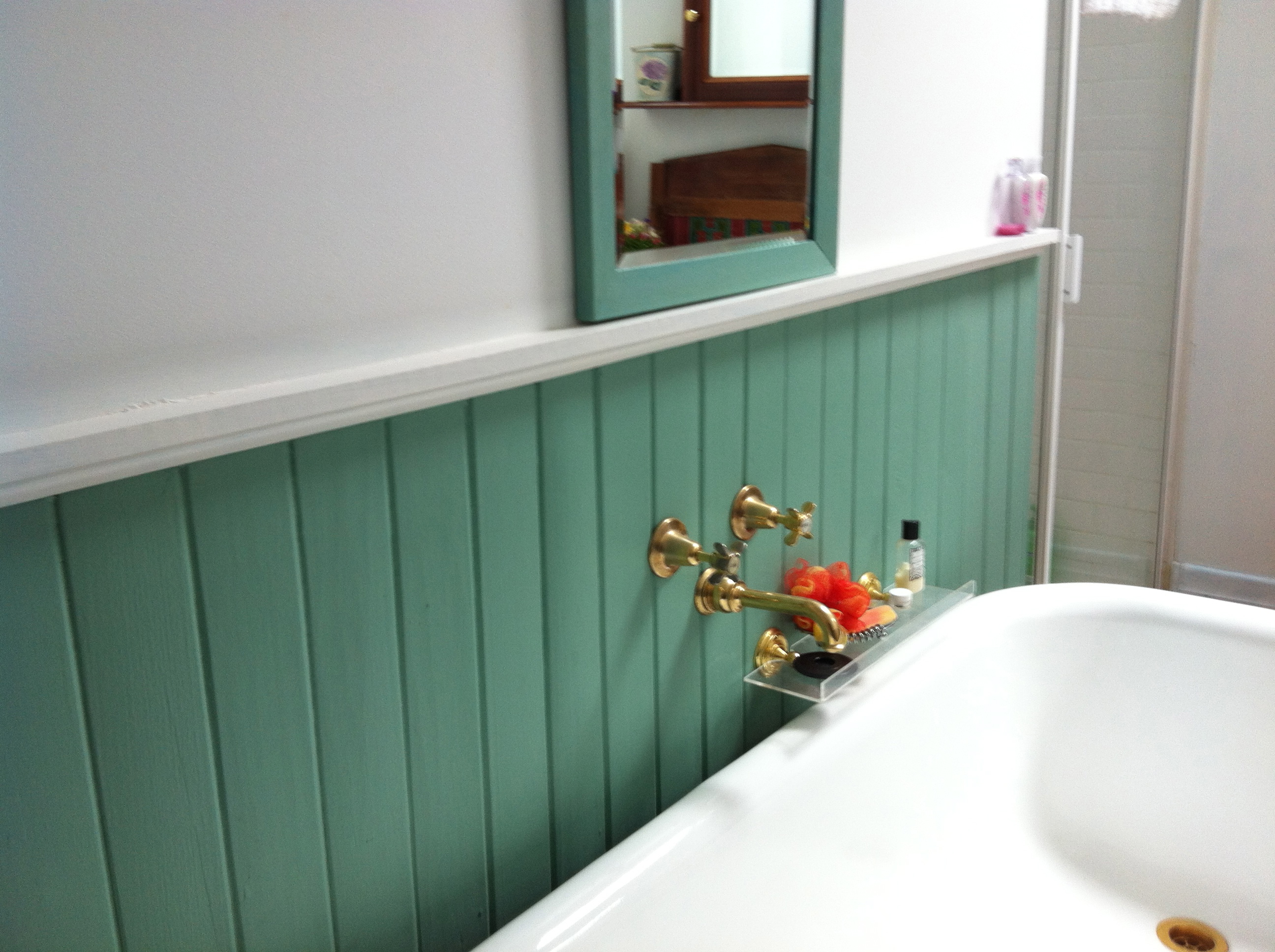
a bathroom renovation!
Why are we so keen on renovation? Is it an extension of ourselves as well as our houses? Or is it a way just to consume more and more? (And I do speak here as a seasoned renovator.) Do we really go to dinner parties and talk of bathroom tiles as Hugh Mackay suggested? Following fashions is not new; it can be seen in the Austen universe where the Eighteenth Century trend was to create the picturesque.
Upon taking over Norland, in Sense and Sensibility Fanny and John Dashwood, successful power couple, make it their daily business to be fashionable. On their estate, what looks good is the most important factor in a decision. Running a self-sufficient estate is not as important as impressing your friends and community. They must do improvements to the place and of course the productive “old walnut trees are all come down”. It reminds me of some people who move in to the old suburbs, raze the old garden getting rid of the roses and fruit trees, and replace the whole with shrubs and pebbles in the latest fashion. (Fortunately this is no longer the latest fashion!) And then they congratulate themselves on having destroyed a garden because now they are being water wise! No wonder Eleanor had to keep the “concern and her censure to herself” when she has to listen to her brother’s fashionable plans.
Filed under Living the Simple Life
Can attention to the domestic make us happy?

English: The Merri Creek passing through Fairfield and Clifton Hill with the Melbourne city skyline in the distance, Victoria, Australia. (Photo credit: Wikipedia)
It may seem a strange question in our modern world but it seems to me many are asking it. Now that there are so many opportunities for men and women to find satisfaction in their workplaces and their careers some people are perversely turning their back on such values and reinstating the need for pleasure in our domestic lives. No one would want to be exclusively confined to a domestic sphere but it can be a place where happiness is found for certain periods of our lives.
Egotistical-Emma, in Emma, wants us to believe that the local farmers, the Martins and Mr Martin in particular, are living an inferior lifestyle. Yet when we look more closely at the Martin way of living it is almost idyllic: there are moonlight walks, espaliered apple trees, a pretty gravel walk, walnuts, and even a shepherd boy brought near the fire to sing to the family. Continue reading
Filed under Living the Simple Life
Local Landscapes
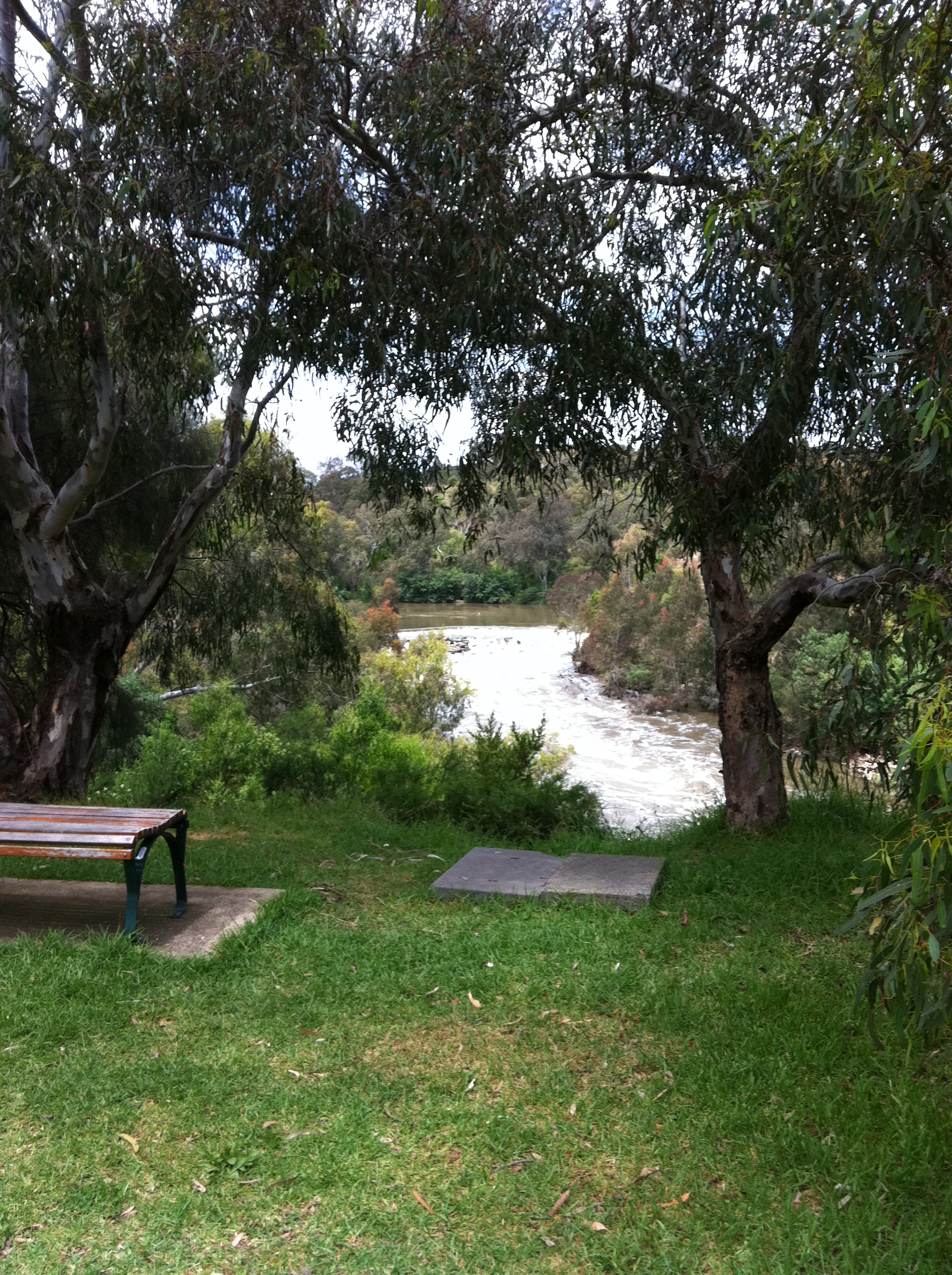
Clifton Hill
Taking delight in our local landscape brings us happiness. Sometimes we think we need the exotic holiday to be happy but I know that within walking distance from my home there are walks of such beauty that can take your breath away. A little bit of water, a creek or a river, some natural vegetation and a pathway through can sometimes be enough to lift the spirits of a despondent person. Nauseatingly-Nice Fanny Price in Mansfield Park appreciates the landscape; she notices “the bearings of the roads, the difference of the soil, the state of the harvest, the cottagers, the cattle”. This is contrasted with Mercenary-Mary who saw “nature inanimate nature, with little observation her attention was all for men and women”.
Nauseatingly-Nice Fanny Price appreciates the natural: She is looking out the window one starlit night and says, Continue reading
Filed under Living the Simple Life
Does a garden help?
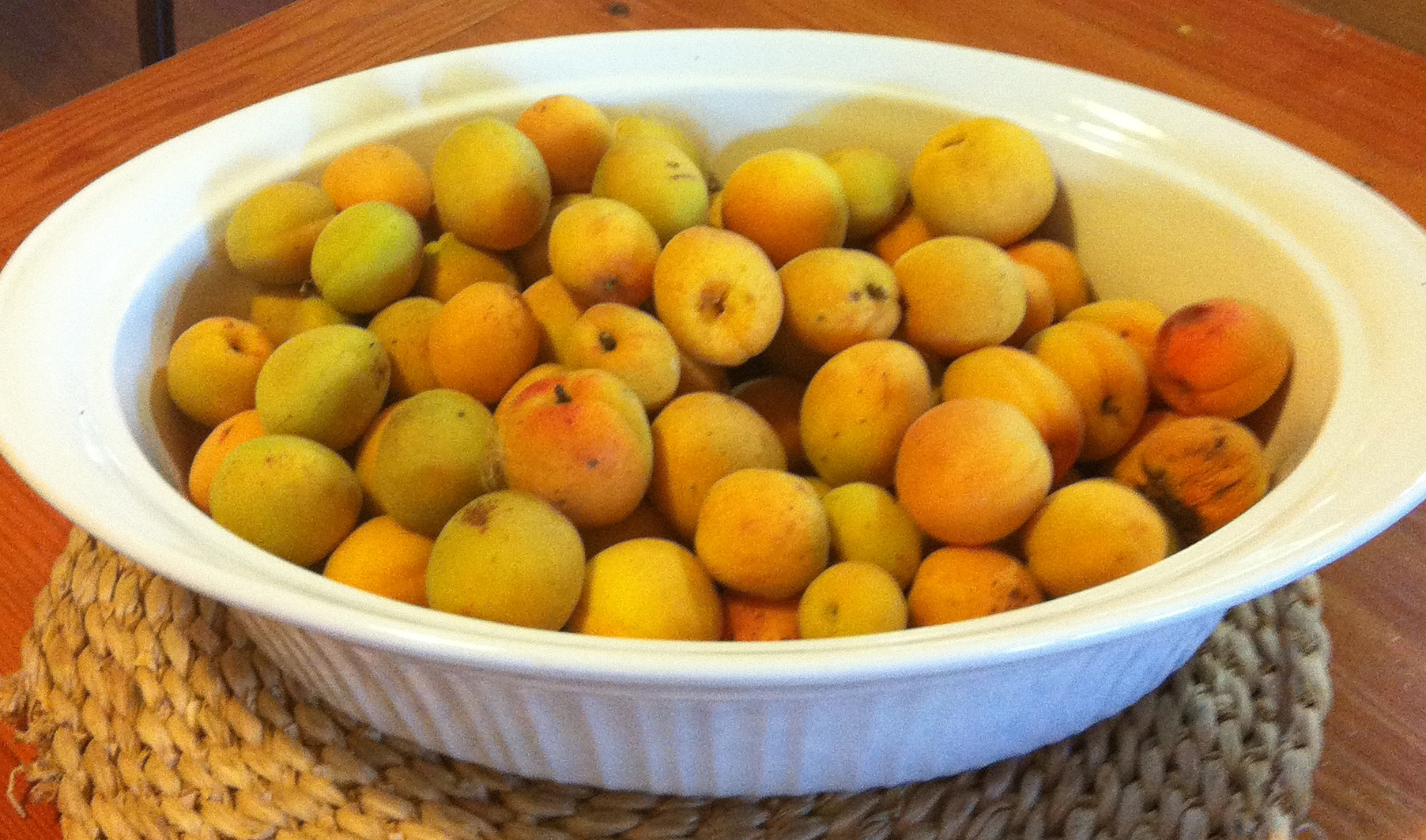
Apricots coaxed from the tree early last summer
All of the settings of the Austen Six include a garden as a prerequisite for a happy life. For those who could afford it a full time gardener would do the backbreaking work. However, the various gardens were managed for food and flower production as well as pleasure. Fruit trees and vegetable gardens are often mentioned in the Austen Six; one example was Barton Cottage in Sense and Sensibility. The three women, recently moved from a much larger house but found pleasure in the garden. Also landlord and neighbour, Lord Middleton’s Barton Park was a successful estate and upon arrival he had sent “a large basket full of garden stuff and fruit” which was later followed by a present of game. But the Dashwoods would have to be mindful of making their own garden productive. There were no green grocers down the road and the concept of self sufficiency was a necessity, not a modern eco friendly dream. Any garden needed to be Continue reading
Filed under Living the Simple Life
Climate Change and Social Dislocation,

Blossoming Bougainvillea in a garden
What can we do about climate change and social dislocation? The simple answer is we do not change it. We simply change us. We live the emotionally intelligent way and through that we effect change on a larger scale. We ‘act local but think global’, the brilliant slogan that encapsulated the way to change lives and communities. Why is it that we have problems like the third world shortage of food and the increase in obesity at the same time? Continue reading
Filed under Living the Simple Life

 Austen's Guide to Happiness