
Once upon a time in a little land called Australia, ok it was a big land but a small population, there was a female politician called Julia. She had been born from immigrants who had seen education as the key to advancement and this she did. She advanced in spades until one day she entered Parliament. She worked hard, got on well with others and negotiated through such hostile environments that she was accepted and became very important – so important that she played second fiddle to the very important white males who were the leaders. And then one day, when things weren’t going so well amongst the important white males she thought she may as well be the leader. Naturally, as happens in quaint little democracies, there were loud howls of protest. But she put her head down, did what lots of women do, cleaned up the mess, and got on with business. Continue reading
Tag Archives: Jane Austen
What do Fanny and Julia have in common?
Filed under Feminism
What about the contentment gene?

Alison Steadman plays Mrs. Bennet in Pride and Prejudice (Photo credit: Canadian Pacific)
The contentment gene should be patented. But if not born with it, is there other ways to acquire it? Some have called it the happiness set point. Looking at our expectations might be a good place to start. Sometimes we need to be vigilant to ensure that our expectations are not fueling our unhappiness. Expecting little can ironically lead to a happier life as one doesn’t suffer constant disappointment. In our Western world we often grow up with a sense of entitlement. We expect to do better than the last generation. We expect to own a fashionable home, we expect Continue reading
Filed under Resilience
Can attention to the domestic make us happy?

English: The Merri Creek passing through Fairfield and Clifton Hill with the Melbourne city skyline in the distance, Victoria, Australia. (Photo credit: Wikipedia)
It may seem a strange question in our modern world but it seems to me many are asking it. Now that there are so many opportunities for men and women to find satisfaction in their workplaces and their careers some people are perversely turning their back on such values and reinstating the need for pleasure in our domestic lives. No one would want to be exclusively confined to a domestic sphere but it can be a place where happiness is found for certain periods of our lives.
Egotistical-Emma, in Emma, wants us to believe that the local farmers, the Martins and Mr Martin in particular, are living an inferior lifestyle. Yet when we look more closely at the Martin way of living it is almost idyllic: there are moonlight walks, espaliered apple trees, a pretty gravel walk, walnuts, and even a shepherd boy brought near the fire to sing to the family. Continue reading
Filed under Living the Simple Life
Does a garden help?
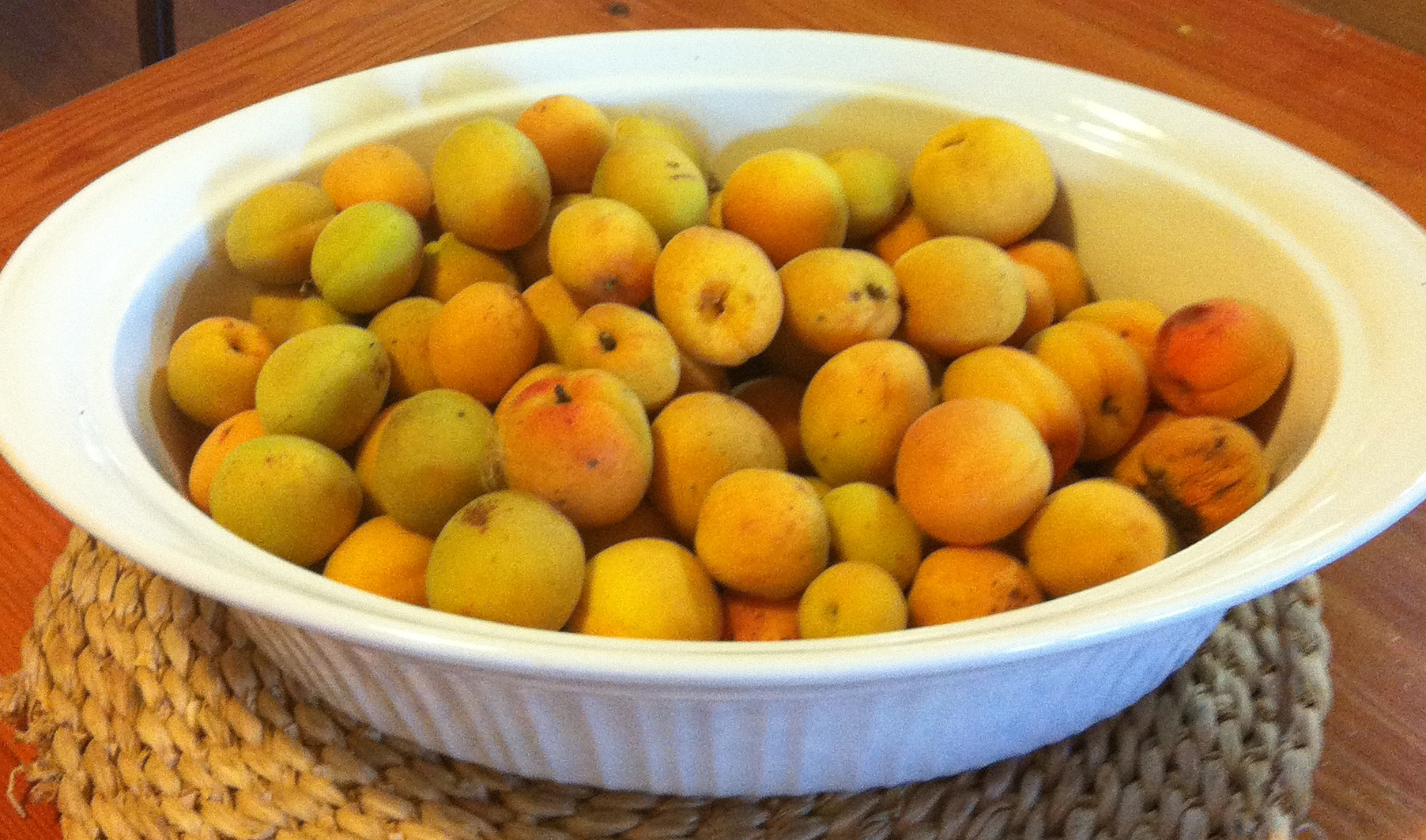
Apricots coaxed from the tree early last summer
All of the settings of the Austen Six include a garden as a prerequisite for a happy life. For those who could afford it a full time gardener would do the backbreaking work. However, the various gardens were managed for food and flower production as well as pleasure. Fruit trees and vegetable gardens are often mentioned in the Austen Six; one example was Barton Cottage in Sense and Sensibility. The three women, recently moved from a much larger house but found pleasure in the garden. Also landlord and neighbour, Lord Middleton’s Barton Park was a successful estate and upon arrival he had sent “a large basket full of garden stuff and fruit” which was later followed by a present of game. But the Dashwoods would have to be mindful of making their own garden productive. There were no green grocers down the road and the concept of self sufficiency was a necessity, not a modern eco friendly dream. Any garden needed to be Continue reading
Filed under Living the Simple Life
Climate Change and Social Dislocation,

Blossoming Bougainvillea in a garden
What can we do about climate change and social dislocation? The simple answer is we do not change it. We simply change us. We live the emotionally intelligent way and through that we effect change on a larger scale. We ‘act local but think global’, the brilliant slogan that encapsulated the way to change lives and communities. Why is it that we have problems like the third world shortage of food and the increase in obesity at the same time? Continue reading
Filed under Living the Simple Life
Learning to Enjoy the Everyday

Jane Austen lived here, in Chawton, during her final years. (Photo credit: Wikipedia)
Jane Austen had much to say in an indirect way about living the local and everyday life – the simple life. To us in a time of environmental damage it may also be worthwhile for us to consider how others in the past lived a sustainable life. That is not to romanticize the past or sentimentalize it but to learn from it and apply it to a modern setting.
Astoundingly in the affluent West we have rates of depression and mental illness that startle us. Why? Continue reading
Filed under Living the Simple Life
Jane: in need of a ‘competence’

A money box, probably from last century. Without money and without the the means to make money, women were in a very precarious position.
Dear reader, as you may have noticed I find it annoying when I read in some sources that Jane Austen lived a sheltered life. It is as if we believe that women somehow were immune to the troubles that were going on around them. Surely it is more accurate to say that as women had no economic or political power they were in a much more precarious position; they had to learn to suffer in silence as their needs and wants were mostly unconsidered when the important decisions were being made. When we acquiesce and label women like Jane Austen as “sheltered”, it is as if we are buying into the propaganda of the times that by treating them as inconsequential we are really protecting and sheltering them. Continue reading
Filed under Money
Will a cottage do?
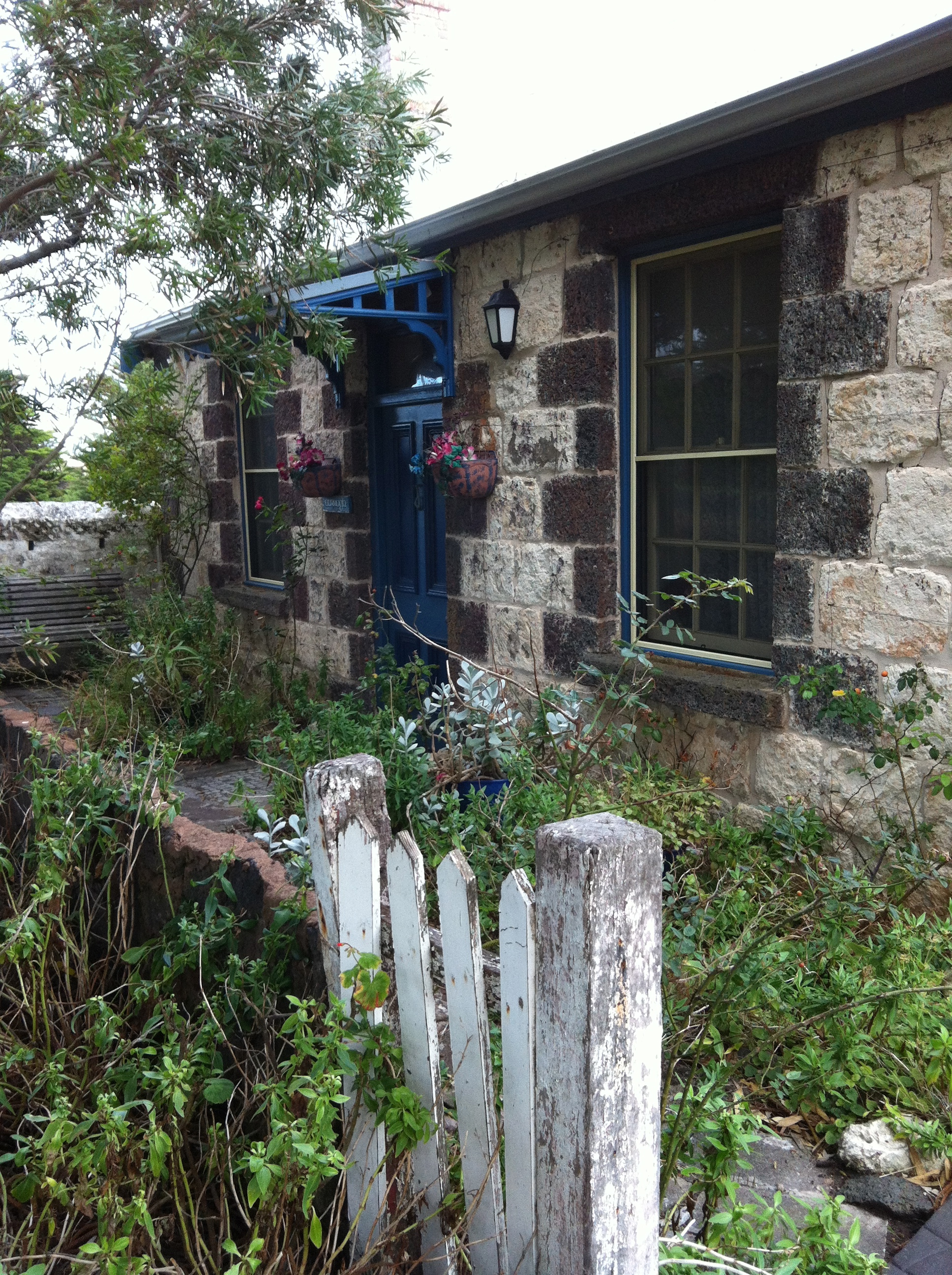
A seafarer’s cottage near the windswept dunes in Pt Fairy, Victoria, Australia
Invariably when someone waxes lyrical about how unimportant they think money is, how he’d/she’d be happy to live anywhere and that money doesn’t matter, you can be pretty sure they may profess too much or have never faced a shortage of it. Anyone who has struggled with insufficient money to pay their bills or rent knows that money does matter. Accumulating wealth may not, but paying for necessities does. In the Austen world of the Austen Six it certainly seems to hold true.
In the Austen Six there are a variety of characters who are mercenary to the extreme but profess the opposite. My favourite, New-Best-Friend-Isabella Thorpe, from Northanger Abbey Continue reading
Filed under Money
Nasty-Aunt Norris

English: Illustration for ch.18 of Mansfield Park, in the Series of English Idylls, published by J.M Dent & Co. (London) and E.P. Dutton & Co. (New York) : She worked very diligently under her aunt’s directions. Français : Illustration pour le ch. 18 de Mansfield Park, de Jane Austen. Fanny travaillait avec beaucoup d’application sous la direction de sa tante Norris (Photo credit: Wikipedia)
The most masterfully crafted miser in the Austen universe is of course Nasty-Aunt Norris from Mansfield Park. Not only does she love to save her own money but she is happy to spend that of others. And such miserly attributes were also accompanied with a capacity for bossiness that made her see herself as the director of most things. “Her love of money was equal to her love of directing”. Mrs Norris didn’t start out this way, but once she had married on a lower income than she had been used to, she had to economise and once having “begun as a matter of prudence, soon grew into a matter of choice”. I shudder when I read of Mrs Norris as I know too well the satisfaction of having spent less than anticipated and the addictive qualities of wanting every purchase to be a bargain.
Nasty-Aunt Norris likes to involve herself in everything. It is her idea that the little Fanny Price should come and live with her rich relatives. And she was to congratulate herself for her benevolence at no cost to herself. Continue reading
Filed under Money
Actions Speak

English: in ch. 2 of Sense and Sensibility (Jane Austen Novel) Mrs Dashwood asks why was he to ruin himself and their poor little Harry? Français : Sense and Sensibility (Jane Austen), ch 2 Mrs Dashwood craint que John prive leur fils d’une part de son héritage en aidant financièrement ses soeurs (Photo credit: Wikipedia)
Those that think too much of ‘pewter’ miss out on the warmth that real relationships can bring; the satisfaction that your partner won’t flee when the chips are down and when the real trials of life begin. Those with superficial values can be bought and seduced by the trappings of position: the overseas post, the expensive dinners and the holidays in exotic locations. Those that can enjoy the fruits but still act ethically towards their families and the people they work with are heroes indeed.
Recall in Sense and Sensibility, the deathbed promise is elicited from Manipulated-and-Mean-Husband-Mr John Dashwood to help his step mother and two half sisters. His father has no power to leave his second wife and three daughters any money. Continue reading

 Austen's Guide to Happiness