Learning to Enjoy the Everyday

Jane Austen lived here, in Chawton, during her...

Jane Austen lived here, in Chawton, during her final years. (Photo credit: Wikipedia)

Jane Austen had much to say in an indirect way about living the local and everyday life – the simple life. To us in a time of environmental damage it may also be worthwhile for us to consider how others in the past lived a sustainable life.  That is not to romanticize the past or sentimentalize it but to learn from it and apply it to a modern setting.

Astoundingly in the affluent West we have rates of depression and mental illness that startle us. Why? Continue reading

Leave a comment

Filed under Living the Simple Life

Jane: in need of a ‘competence’

A money box, probably from last century. Without money and without the the means to make money, women were in a very precarious position.

A money box, probably from last century. Without money and without the the means to make money, women were in a very precarious position.

Dear reader, as you may have noticed I find it annoying when I read in some sources that Jane Austen lived a sheltered life. It is as if we believe that women somehow were immune to the troubles that were going on around them. Surely it is more accurate to say that as women had no economic or political power they were in a much more precarious position; they had to learn to suffer in silence as their needs and wants were mostly unconsidered when the important decisions were being made. When we acquiesce and label women like Jane Austen as “sheltered”,  it is as if we are buying into the propaganda of the times that by treating them as inconsequential we are really protecting and sheltering them. Continue reading

Leave a comment

Filed under Money

Will a cottage do?

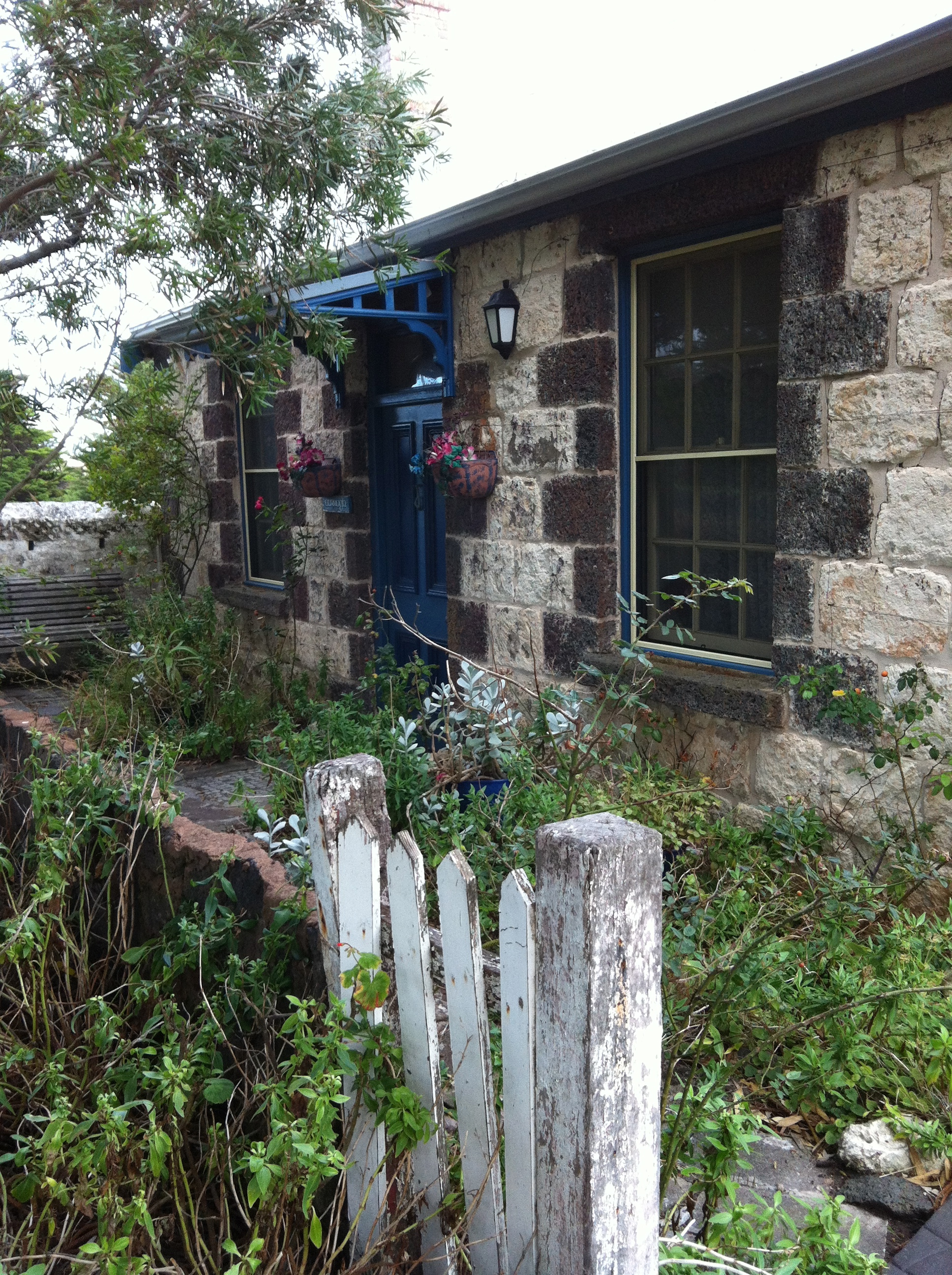
A seafarer's cottage near the windswept dunes in Pt Fairy, Victoria, Australia

A seafarer’s cottage near the windswept dunes in Pt Fairy, Victoria, Australia

Invariably when someone waxes lyrical about how unimportant they think money is, how he’d/she’d be happy to live anywhere and that money doesn’t matter, you can be pretty sure they may profess too much or have never faced a shortage of it. Anyone who has struggled with insufficient money to pay their bills or rent knows that money does matter. Accumulating wealth may not, but paying for necessities does. In the Austen world of the Austen Six it certainly seems to hold true.

 In the Austen Six there are a variety of characters who are mercenary to the extreme but profess the opposite.  My favourite, New-Best-Friend-Isabella Thorpe, from Northanger Abbey  Continue reading

3 Comments

Filed under Money

Nasty-Aunt Norris

English: Illustration for ch.18 of Mansfield P...

English: Illustration for ch.18 of Mansfield Park, in the Series of English Idylls, published by J.M Dent & Co. (London) and E.P. Dutton & Co. (New York) : She worked very diligently under her aunt’s directions. Français : Illustration pour le ch. 18 de Mansfield Park, de Jane Austen. Fanny travaillait avec beaucoup d’application sous la direction de sa tante Norris (Photo credit: Wikipedia)

The most masterfully crafted miser in the Austen universe is of course Nasty-Aunt Norris from Mansfield Park. Not only does she love to save her own money but she is happy to spend that of others. And such miserly attributes were also accompanied with a capacity for bossiness that made her see herself as the director of most things. “Her love of money was equal to her love of directing”. Mrs Norris didn’t start out this way, but once she had married on a lower income than she had been used to, she had to economise and once having “begun as a matter of prudence, soon grew into a matter of choice”. I shudder when I read of Mrs Norris as I know too well the satisfaction of having spent less than anticipated and the addictive qualities of wanting every purchase to be a bargain.

Nasty-Aunt Norris likes to involve herself in everything. It is her idea that the little Fanny Price should come and live with her rich relatives. And she was to congratulate herself for her benevolence at no cost to herself. Continue reading

Leave a comment

Filed under Money

Actions Speak

English: in ch. 2 of Sense and Sensibility (Ja...

English: in ch. 2 of Sense and Sensibility (Jane Austen Novel) Mrs Dashwood asks why was he to ruin himself and their poor little Harry? Français : Sense and Sensibility (Jane Austen), ch 2 Mrs Dashwood craint que John prive leur fils d’une part de son héritage en aidant financièrement ses soeurs (Photo credit: Wikipedia)

Those that think too much of ‘pewter’ miss out on the warmth that real relationships can bring; the satisfaction that your partner won’t flee when the chips are down and when the real trials of life begin.  Those with superficial values can be bought and seduced by the trappings of position: the overseas post, the expensive dinners and the holidays in exotic locations. Those that can enjoy the fruits but still act ethically towards their families and the people they work with are heroes indeed.

Recall in Sense and Sensibility, the deathbed promise is elicited from Manipulated-and-Mean-Husband-Mr John Dashwood to help his step mother and two half sisters. His father has no power to leave his second wife and three daughters any money. Continue reading

1 Comment

Filed under Money

“Pewter” and “vulgar economy” – What did Jane say about money?

antique-metalware-pewter-springhill-tennessee

antique-metalware-pewter-springhill-tennessee (Photo credit: vintagejunkystyle)

Jane Austen said in one of her letters – “I like what Edward calls pewter too”. She was not sentimental or romantic about money: a mercenary attitude to life was not appropriate but one had to be pragmatic. This attitude can be evocative of this earlier time where there was not access to easy credit. And an earlier time when there was not the safety net of the welfare state. My late mother embodied this time too. One of the many memories I have of her is the citing of the proverb, “It is not money that is the root of all evil, it is the love of money”. Such phrases are gleaned from a generation who had a much tougher time and could spout a proverb in the time it took us to switch a TV channel.

Every Charles Dickens fan would remember Macawber in David Copperfield saying, “Annual income twenty pounds, annual expenditure nineteen six, result happiness. Continue reading

1 Comment

Filed under Money

Jane and the Prince Regent

Prince Regent, Future George IV / Prince régen...

Prince Regent, Future George IV / Prince régent, futur George IV (Photo credit: BiblioArchives / LibraryArchives)

An interesting story about Jane, highlighting her modern credentials, is her diplomatic wrangling of dedicating Emma to the Prince Regent. Apparently he had enjoyed the previous Austen books, had copies in his homes and was happy for Jane to dedicate her next novel to him. Jane could not politely refuse to dedicate her book to the Prince Regent when it was suggested. But she was unequivocal Continue reading

3 Comments

Filed under Feminism

Did Jane Austen condone unequal marriage arrangements?

Marriage

Marriage (Photo credit: Lel4nd)

In the Austen Six, Jane Austen parodies mercilessly some pretty appalling marriages; like the comic characters, there are the comic couplings. In poking fun at those in ridiculous relationships she is also sending up the mores of the time that made being married prestigious and spinsterhood piteous.  As a single woman she must have enjoyed exposing the holes in the trappings of married respectability. Continue reading

4 Comments

Filed under Feminism

Jane and the ‘f’ word

English: One of the symbols of German Women's ...

English: One of the symbols of German Women’s movement (from the 1970s) Deutsch: Ein Logo der deutschen Frauenbewegung (aus den 70er Jahren) (Photo credit: Wikipedia)

It is timely with the passing of International Women’s Day for another year that we consider Jane and the f word: can we use feminism in regard to Austen?  As a woman who grew up in the seventies and seemed to inhale feminist values, I never thought of Jane Austen as someone who help feminist values. Emily or Charlotte Bronte – yes. Mary Wollstonecraft -yes.  Her daughter Mary Shelley– yes. But Austen no. Can we use the f word when we are talking about the Austen Six? Previously I had assumed that my search for feminism would be fruitless; that somehow Austen is about old fashioned values and archaic ways that are an anathema to modern women and feminism. It must have been the fairytale weddings at the end of the books that made me hesitant. And for very good reason; women today want to be more than just the woman who gets married at the end of the novel; they want to be more than someone’s mother, wife or daughter. But when I obsessively re-read and search for the feminism in Austen to my surprise I do find it. What is good news for Austen fans is that if you look deeply into the Austen Six there is ample evidence that Austen wanted women to be equal; she was disdainful about the sexist double standards in her society and that the heroines that she created were indeed feisty and independent women.

What sort of women do we want our girls to become? Continue reading

1 Comment

Filed under Feminism

Was Austen’s life sheltered?

English: Back View of Jane Austen, Watercolor

English: Back View of Jane Austen, Watercolor (Photo credit: Wikipedia)

Often when reading excerpts about Austen’s life, there is a sense that Austen lived a sheltered life; that somehow she was immune to the difficulties of life. In reading about her life it is insightful to learn just how tricky Continue reading

3 Comments

Filed under Resilience