
Once upon a time in a little land called Australia, ok it was a big land but a small population, there was a female politician called Julia. She had been born from immigrants who had seen education as the key to advancement and this she did. She advanced in spades until one day she entered Parliament. She worked hard, got on well with others and negotiated through such hostile environments that she was accepted and became very important – so important that she played second fiddle to the very important white males who were the leaders. And then one day, when things weren’t going so well amongst the important white males she thought she may as well be the leader. Naturally, as happens in quaint little democracies, there were loud howls of protest. But she put her head down, did what lots of women do, cleaned up the mess, and got on with business. Continue reading
Category Archives: Feminism
What do Fanny and Julia have in common?
Filed under Feminism
Jane and the Prince Regent

Prince Regent, Future George IV / Prince régent, futur George IV (Photo credit: BiblioArchives / LibraryArchives)
An interesting story about Jane, highlighting her modern credentials, is her diplomatic wrangling of dedicating Emma to the Prince Regent. Apparently he had enjoyed the previous Austen books, had copies in his homes and was happy for Jane to dedicate her next novel to him. Jane could not politely refuse to dedicate her book to the Prince Regent when it was suggested. But she was unequivocal Continue reading
Filed under Feminism
Did Jane Austen condone unequal marriage arrangements?

Marriage (Photo credit: Lel4nd)
In the Austen Six, Jane Austen parodies mercilessly some pretty appalling marriages; like the comic characters, there are the comic couplings. In poking fun at those in ridiculous relationships she is also sending up the mores of the time that made being married prestigious and spinsterhood piteous. As a single woman she must have enjoyed exposing the holes in the trappings of married respectability. Continue reading
Filed under Feminism
Jane and the ‘f’ word

English: One of the symbols of German Women’s movement (from the 1970s) Deutsch: Ein Logo der deutschen Frauenbewegung (aus den 70er Jahren) (Photo credit: Wikipedia)
It is timely with the passing of International Women’s Day for another year that we consider Jane and the f word: can we use feminism in regard to Austen? As a woman who grew up in the seventies and seemed to inhale feminist values, I never thought of Jane Austen as someone who help feminist values. Emily or Charlotte Bronte – yes. Mary Wollstonecraft -yes. Her daughter Mary Shelley– yes. But Austen no. Can we use the f word when we are talking about the Austen Six? Previously I had assumed that my search for feminism would be fruitless; that somehow Austen is about old fashioned values and archaic ways that are an anathema to modern women and feminism. It must have been the fairytale weddings at the end of the books that made me hesitant. And for very good reason; women today want to be more than just the woman who gets married at the end of the novel; they want to be more than someone’s mother, wife or daughter. But when I obsessively re-read and search for the feminism in Austen to my surprise I do find it. What is good news for Austen fans is that if you look deeply into the Austen Six there is ample evidence that Austen wanted women to be equal; she was disdainful about the sexist double standards in her society and that the heroines that she created were indeed feisty and independent women.
What sort of women do we want our girls to become? Continue reading
Jane’s mother’s little helper at Jane’s birth – Philadelphia Austen Hancock
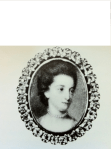
Jane’s birthday was yesterday and in her honour I ask: who was with Jane’s mother, when Jane was born? Interestingly it was her sister-in-law Philadelphia Austen Hancock, George Austen’s sister. From this we can assume that Phila, as she was called, was a well liked and trusted sister-in-law. George, Phila and Leonora were left orphaned and penniless but with family connections – their mother had been a baronet’s daughter. George used education as an avenue for advancement but this was not an option for Phila. Denied an education as a path to advancement she initially stayed living in London with an aunt. She had no dowry and so had to work for a living, hence she was apprenticed to a milliner in Covent Garden. It must have been a big step down for this baronet’s granddaughter. At that time, many milliner shops around Covent Garden were actually Continue reading
Filed under Feminism

 Austen's Guide to Happiness